Selected Books by Mark J Horacek
Explore works of poetry, reflective nonfiction, speculative fiction, and illustrated prose centered on humanity, truth, survival, meaning, discernment, love, mortality, science, and the unknown.
These books range from meditations on love, life, and death to reflections on truth and human confusion, from illustrated speculative fiction to explorations of science, mystery, imagination, and the spiritual questions that shape human experience.
Featured Works
Can We Survive the Future?
Thoughts for Being Human
Survivors of the Silent Earth — Reader’s Edition
How To Stay Human in an Age of Confusion
The Fall of Truth: Book I
The Fall of Truth: Book II
The Eternal Gifts: Love, Life, and Death — Second Illustrated Color Edition
Can We Survive the Future?
Can We Survive the Future? is being prepared in three related publication forms: one complete ebook edition containing the full work, and two paperback volumes that divide the same larger inquiry into a more readable printed format. The Full Edition presents the entire twelve-part, seventy-seven-chapter work as one complete book. Volume I and Volume II are not separate projects, but the two-part paperback form of the same civilizational inquiry: Volume I focuses on recognition, life-support systems, ordinary life, adaptive capacity, and shared reality; Volume II turns toward power, AI, collapse risk, responsibility, and decision-making for the good of the whole.
Can We Survive the Future? — Full Edition
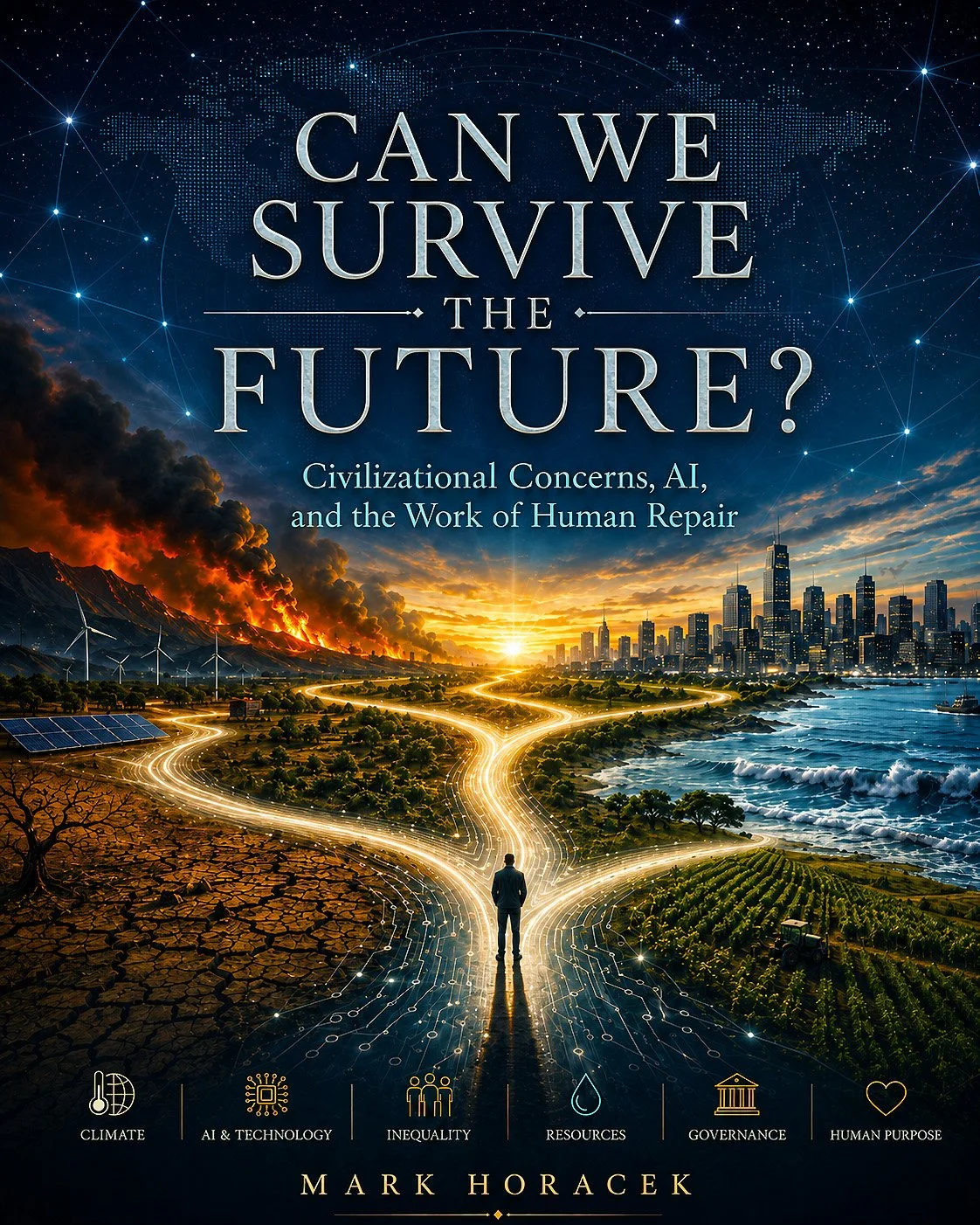
Can We Survive the Future? is a large-scale examination of the pressures now shaping civilization and the choices that may determine the quality of human survival.
The book begins with a simple but demanding claim: the future is not one problem. Climate, water, food, fertility, health, housing, work, education, technology, public trust, inequality, governance, war, AI, and meaning are not separate concerns. They interact. They compound. They can weaken or strengthen one another across time.
Rather than offering prophecy, panic, or a single solution, the book develops a framework for civilizational discernment: how to recognize converging risks, trace causal relationships, evaluate uncertainty, distinguish negative, partial, and corrective adaptation, and think responsibly before acting at scale. It asks not only whether humanity can survive, but what kind of survival our choices are preparing.
Across twelve parts and seventy-seven chapters, the book moves from recognition to repair: from life-support systems and ordinary life to shared reality, power, AI, collapse risk, moral responsibility, and decision-making for the good of the whole. Its central argument is that survival requires more than technology or endurance. It requires clearer recognition, wiser direction, and a renewed commitment to human repair.
Can We Survive the Future? — Volume I
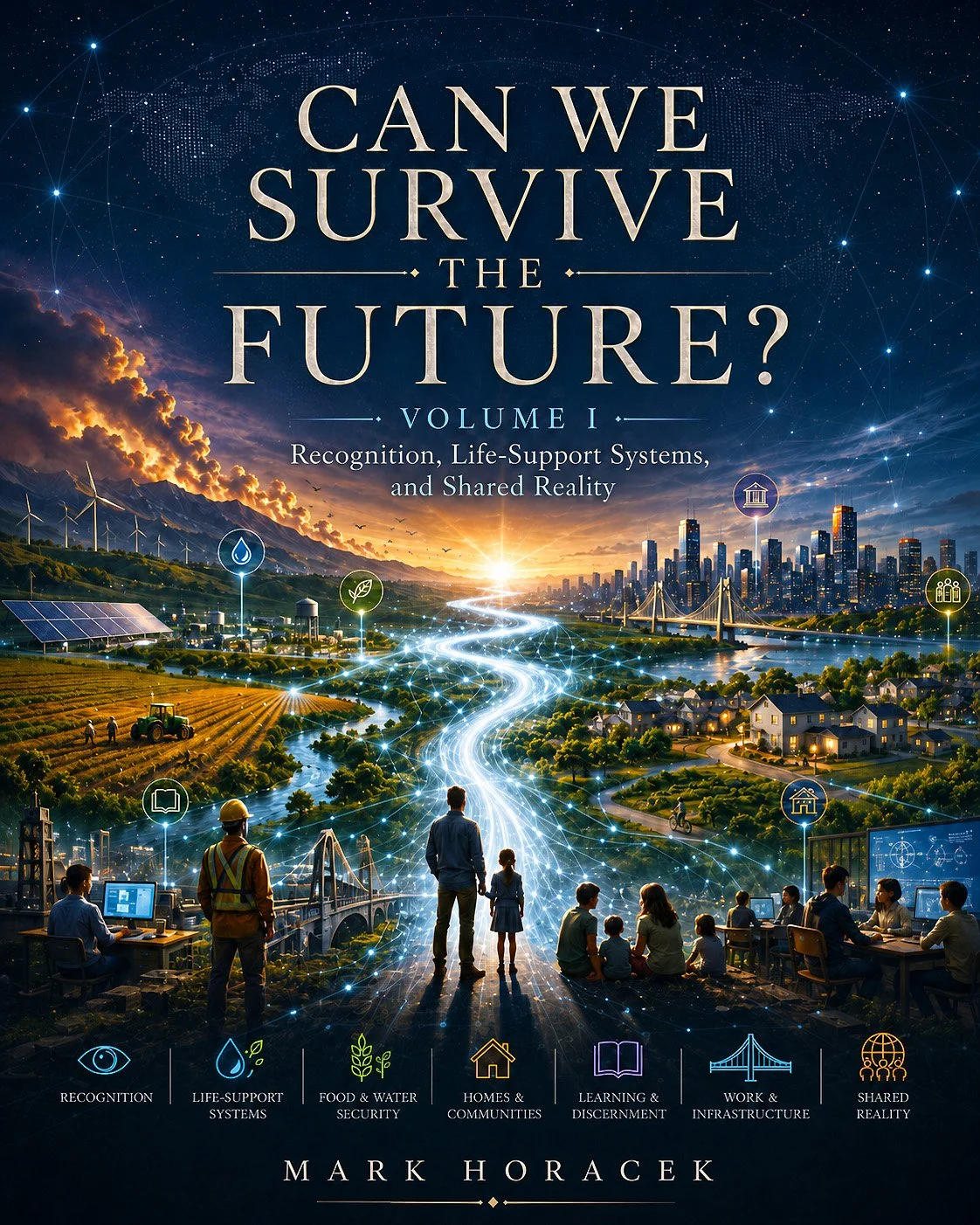
Can We Survive the Future? — Volume I examines the first great task of civilizational survival: learning to see the field clearly enough to respond wisely.
It begins with the recognition that the future is not one problem but a convergence of interacting pressures. Climate, water, food, health, fertility, family life, housing, education, work, public trust, meaning, and technology all shape one another. A civilization may withstand one pressure when its other systems are strong, but multiple pressures can become more dangerous when they weaken together.
Volume I builds the book’s framework for civilizational discernment. It explains why recognition must come before correction, why trajectories are not prophecies, and why stability and collapse are multivariate. It then examines planetary life-support systems, human continuity, children, care, household viability, relationships, community, spiritual welfare, work, education, science, and adaptive capacity. The volume closes with information integrity, shared reality, trustworthy expertise, cybersecurity, language, and public reasoning.
Its guiding question is: can we see reality clearly enough to act together? Volume I argues that survival begins with recognition—seeing not only the isolated problems before us, but the relationships among them. Before civilization can repair what is breaking, it must understand what is connected.
Can We Survive the Future? — Volume II

Can We Survive the Future? — Volume II begins where recognition meets power.
Having examined the pressures shaping ordinary life, life-support systems, work, knowledge, and shared reality, this volume turns to the forces that direct civilization: debt, financial fragility, inequality, corporate incentives, supply chains, infrastructure, government priorities, rule of law, political stability, migration, war, and catastrophic conflict.
It then examines AI and robotics as amplifiers of human direction. AI can accelerate manipulation, surveillance, labor disruption, synthetic reality, and catastrophic misuse, but it may also assist health, education, science, ecological repair, climate adaptation, food systems, water stewardship, and civilizational dashboards when governed wisely. The question is not whether intelligence will grow more powerful, but whether it will be directed toward the good of the whole.
Volume II moves through collapse risk, negative adaptation, partial adaptation, corrective adaptation, and the possibility of changing trajectory before systems fail. It then turns from analysis to moral responsibility: the lives we are trying to preserve, meaning after the analysis, human-AI collaboration as responsibility, and becoming worthy of the future. Its final capstone develops decision-making for the good of the whole, asking how civilization can avoid solutions that become future problems.
Thoughts for Being Human
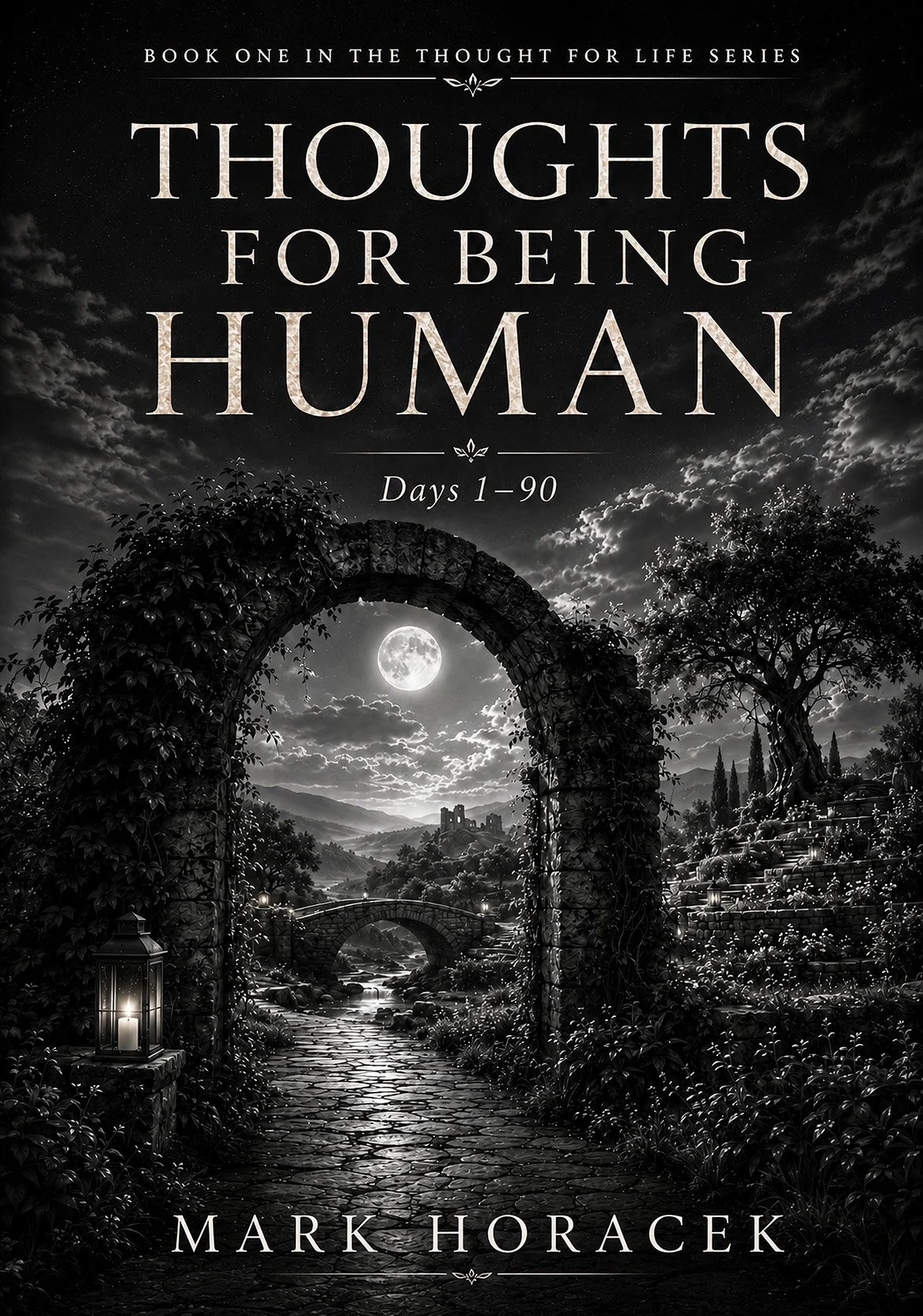
Thoughts for Being Human gathers ninety reflections on truth, love, responsibility, discernment, and remaining human under pressure.
Drawn from the deeper themes that move across Mark Horacek’s larger body of work, this first volume in the Thought for Life Series distills those messages into a quieter daily form. These reflections are meant to be read slowly, one thought at a time, as invitations to pause, examine, remember, and return to what matters.
Across six parts, the book moves from seeing clearly and choosing wisely to surviving moral pressure, honoring vulnerability, serving faithfully, and stewarding what has been entrusted to us. It asks how we remain truthful when confusion is easier, loving when hardness is tempting, responsible when avoidance would be simpler, and hopeful when life feels heavy.
This is not a book of easy answers. It is a companion for thoughtful readers trying to live with greater clarity, courage, humility, and care.
For those seeking meaning in difficult days, Thoughts for Being Human offers a path of reflection — and a reminder that a life becomes more human by what it notices, what it loves, what it refuses to become, and what it faithfully tends.
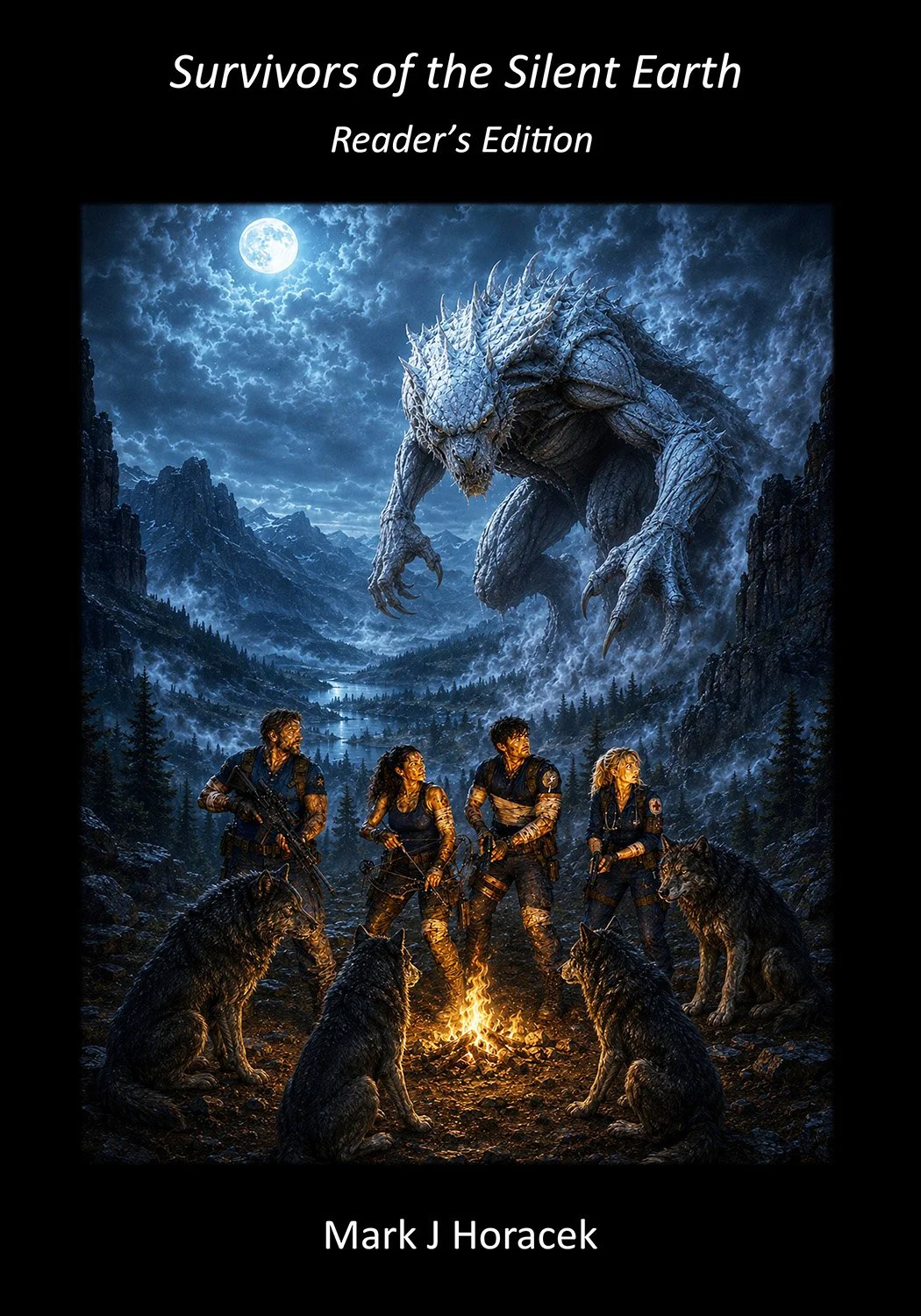
Survivors of the Silent Earth — Reader’s Edition
Inside the Book
An Illustrated Speculative Science-Fiction Survival Epic
A century after humanity’s collapse, the Earth no longer belongs to us.
The cities have fallen silent. Forests have reclaimed the roads. Rivers have shifted, predators have evolved, and the old belief that human beings stand above the natural world has become one more ruin. Hidden in the mountains, the survivors of Fort Eidelon have endured through discipline, memory, and the protection of their bonded guardians.
When Jonah, Mara, Eli, and Eva leave the safety of the Fort, they enter a world where every landscape is a territory, every creature is an answer to pressure, and survival depends on more than courage or weapons. Alongside their Canilupions, Veilfalcons, and Equine Titans, they must cross a wilderness shaped by biological consequence, ecological power, and the long aftermath of human failure.
At the center of the journey waits the Shadowstalker: a sovereign creature of terrifying strength and strange discernment. It does not merely hunt. It watches. It studies. It judges.
Survivors of the Silent Earth — Reader’s Edition blends creature-thriller suspense, tactical survival, found-family loyalty, biological plausibility, and moral consequence. The maps and chapter images are part of the intended reading experience, revealing geography, scale, creature evolution, visual identity, and the deeper question at the heart of the story:
Can humanity still earn a place in a world it no longer commands?
The World and the Journey
The Transformed Cities
The story begins in the ruins of human civilization, where scavenging, silence, and evolved predators reveal what remains after humanity’s collapse.
Fort Eidelon
The mountain refuge preserves knowledge, discipline, memory, and the fragile hope that humanity can survive without repeating the failures that helped break the world.
The Aletheian Basin
The northern basin becomes the expedition’s testing ground: a place of water, stone, forest, elevation, danger, and the first true possibility of a future settlement.
Camp Aletheia
More than a campsite, Camp Aletheia becomes a symbol of trust, adaptation, vigilance, and the survivors’ attempt to belong within the wilderness rather than conquer it.
Veilspine Lake
The distant lake points toward the next awakening beneath the world: a hidden threat whose disturbance will carry the story beyond the Reader’s Edition.
Creatures, Guardians, and Meaning
The Bonded Canilupions
Shadow, Luna, Thor, and Freya are not pets or weapons. They are intelligent guardians whose loyalty, strength, and discernment reshape what survival means.
Veilfalcons and Equine Titans
The aerial guardians and powerful horses expand the survival system, giving the expedition speed, vigilance, transport, protection, and a deeper bond with transformed life.
Bloodwings and Other Predators
The creatures of the transformed Earth are not random monsters. They are evolutionary consequences, shaped by pressure, scarcity, anatomy, territory, and survival.
The Dark Forest
The forest distorts sight, sound, time, and certainty, forcing the survivors to confront fear, disorientation, rescue, loyalty, and the limits of human control.
The Shadowstalker
The sovereign presence of the wild stands at the moral center of the story, watching and judging whether humanity can survive without trying once more to dominate.
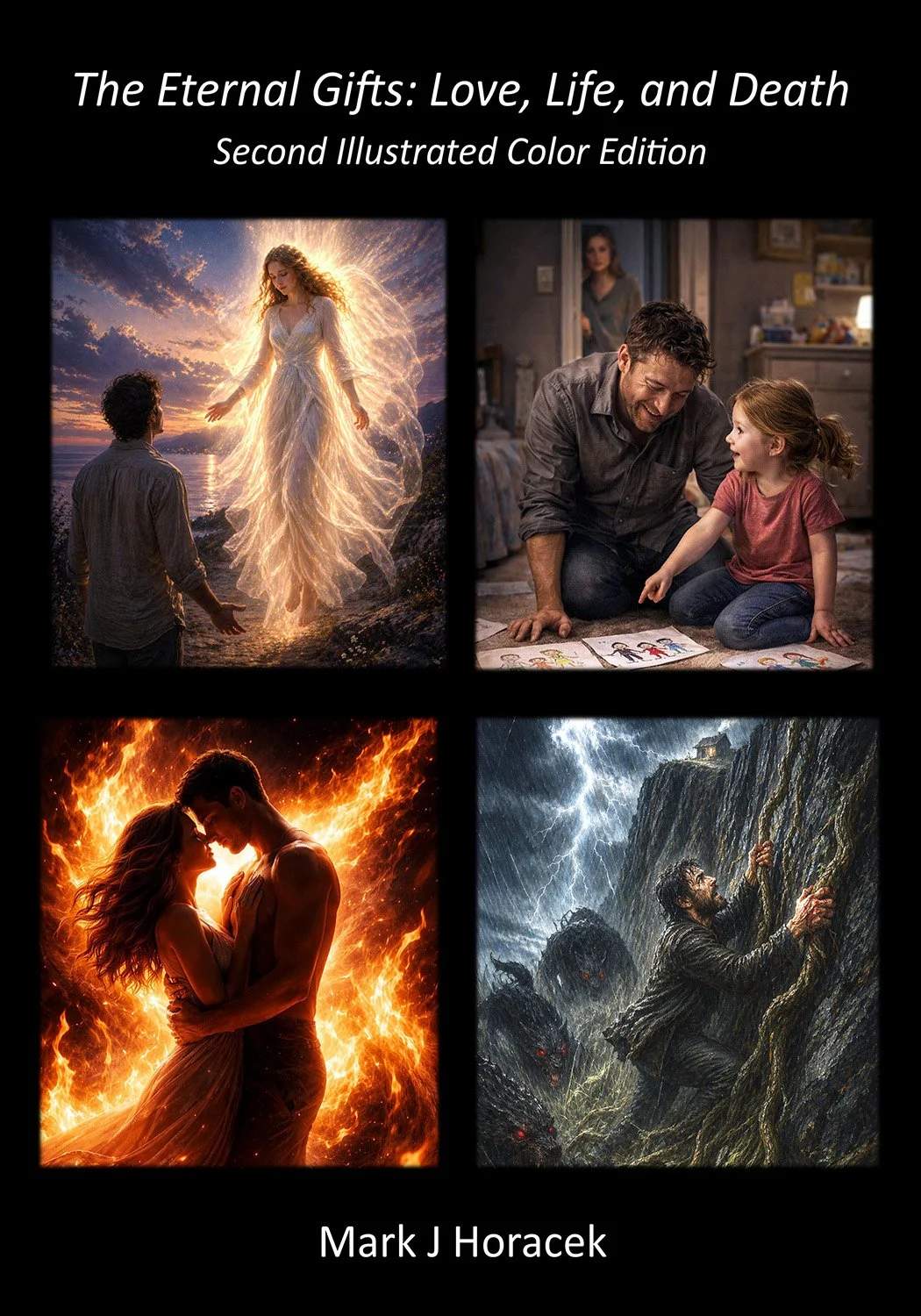
The Eternal Gifts: Love, Life, and Death
Second Illustrated Color Edition
Inside the Book
An Illustrated Journey Through Love, Mortality, Memory, and Meaning
The Eternal Gifts: Love, Life, and Death — Second Illustrated Color Edition is a deeply expanded illustrated collection of verses and reflections exploring the most intimate and enduring forces of human life: love, mortality, grief, longing, memory, courage, family, and the search for meaning.
This edition moves through tenderness and romance, loneliness and loss, fear and transformation, moral struggle and human connection. Each verse becomes more than a poem; it becomes an emotional landscape, accompanied by images and Resonances that deepen the meaning behind the words.
Across its pages, love appears in many forms: romantic devotion, family belonging, the love that remains after death, the love that must become honest before it becomes forever, and the love that calls us back to kindness, courage, and responsibility. Life is presented as fragile, beautiful, wounded, and still worth cherishing. Death is not treated only as an ending, but as a threshold that reveals what mattered, what was left unsaid, and what love may still carry forward.
This illustrated edition invites readers to reflect on what it means to love deeply, lose honestly, live gratefully, and find meaning within the eternal gifts that shape us all.
Love, Memory, and Human Connection
You Are the Gift I Admire
A tender opening meditation on being seen, cherished, and no longer alone beneath the surface of solitude.
Our Path in the Light of the Moon
A luminous romantic verse exploring recognition, longing, reverence, and the path love makes through darkness.
The Heart of Home
A moving reflection on family, childhood, belonging, and the physical ways love leaves evidence in a life.
Before We Promise Forever
An honest examination of commitment, asking what love requires before two lives are joined in trust and responsibility.
The Many Faces of Love
A wide-ranging reflection on love as presence, absence, care, risk, faithfulness, transformation, and endurance.
Mortality, Grief, Courage, and Meaning
Death Comes for Me
A haunting confrontation with mortality, fear, bodily decline, surrender, and the mystery beyond the threshold.
The Chasm of Loneliness
A grief-filled exploration of absence, silence, and the ordinary moments made holy by the loss of love.
A Dying Earth’s Lament
A moral and ecological reflection on Earth as mother, humanity’s betrayal, and the consequences of mistaking gift for resource.
The Wounds We Cannot See
A compassionate reflection on hidden suffering, silence, kindness, and the courage to stand with the wounded.
A Father’s Words to His Children
A late-life offering of love, regret, wisdom, gratitude, integrity, and the hope that what matters most will be carried forward.
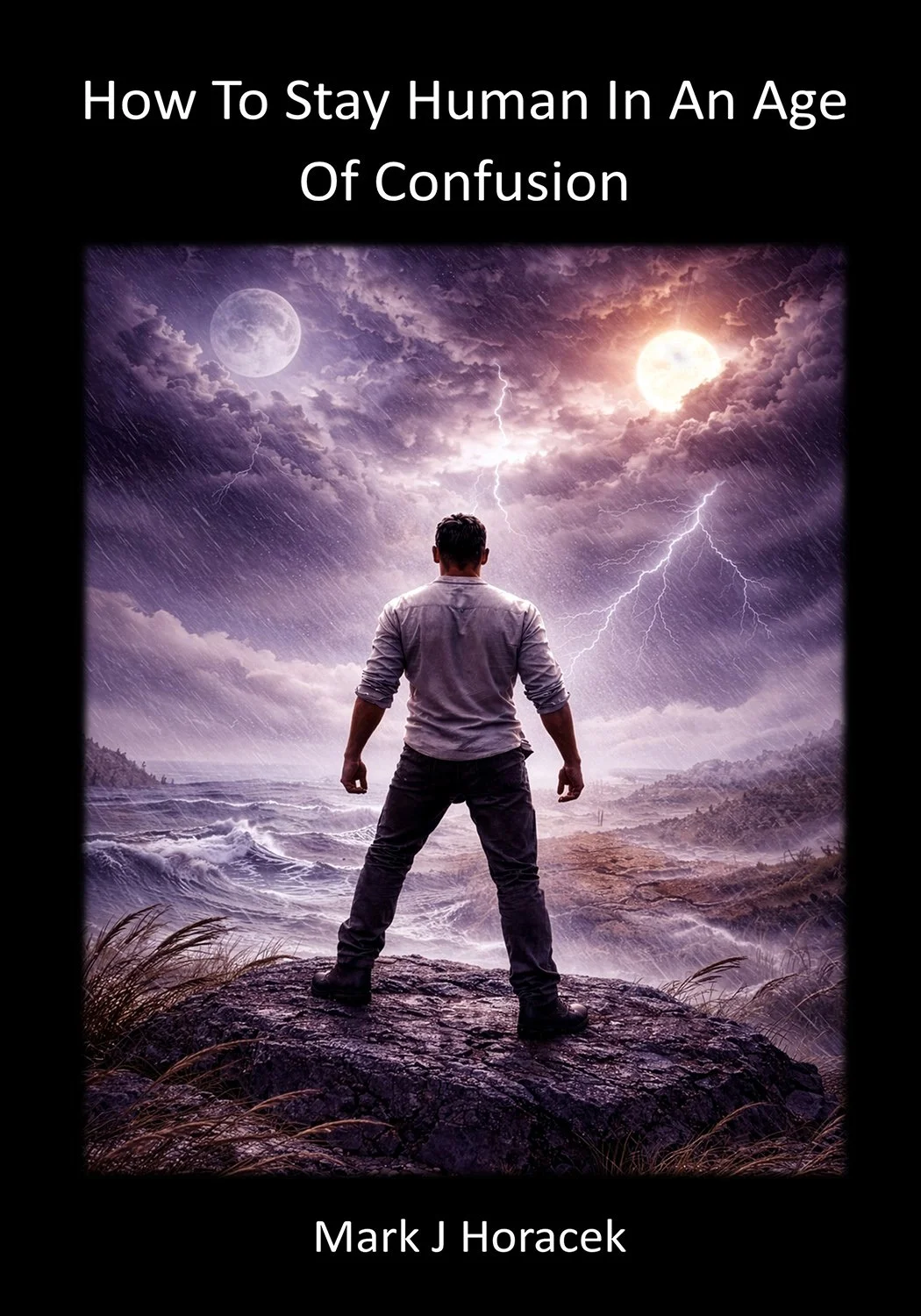
How To Stay Human in an Age of Confusion
Inside the Book
Finding Orientation, Discernment, and Humane Hope in a Disoriented World
How To Stay Human in an Age of Confusion examines what happens when confusion becomes more than a passing feeling and begins to shape the atmosphere of human life.
The book traces how disorientation enters the person, the family, the community, the nation, and the larger structures of civilization. It asks what happens when people live too long under contradiction, distortion, speed, noise, exhaustion, abstraction, and conflict — and how these forces weaken shared reality, strain families, erode empathy, hollow out meaning, and make people easier to manipulate.
But this book is not only diagnostic. It is also reconstructive.
After following the descent into confusion, it turns toward recovery: what must be refused, what must be protected, what kind of human being must be formed, what role humane structures must play, and what kind of future could still be built if truth, dignity, care, discernment, and responsibility were joined again in the work of shared life.
At its heart, this is a book about moral recovery: the recovery of conscience where numbness has spread, the recovery of empathy where abstraction has narrowed feeling, the recovery of clarity where confusion has become profitable, and the recovery of hope strong enough to see what is broken without surrendering to despair.
The Descent into Confusion
When Orientation Breaks Before the Day Begins
Explores the lived atmosphere of confusion and the way disorientation can greet people before ordinary life even begins.
When Childhood Inherits Instability
Shows how children absorb atmospheres they did not create and inherit confusion before they have words for what they are carrying.
When Shared Reality Fails Inside the Family
Examines what happens when people who love one another no longer inhabit the same understanding of reality.
When Communities Lose Their Living Center
Considers how communities weaken when shared meaning, trust, memory, and moral orientation begin to collapse.
When the Nation Can No Longer Hold a Common World
Traces the danger of a society that can no longer sustain enough shared reality to reason, grieve, deliberate, or hope together.
Recovery, Protection, and Hope
When Clarity Demands Refusal
Asks what must be refused when confusion, distortion, cruelty, and dehumanization become normalized.
When Value Requires Protection
Turns toward the human goods that must be defended: truth, childhood, dignity, care, conscience, and shared humanity.
When Truth Must Take Form in Us
Explores the inner formation required for people to become sources of light rather than carriers of confusion.
When Structure Must Serve Humanity
Argues that humane recovery cannot remain private; institutions and structures must be judged by whether they protect human dignity.
When Hope Becomes a World
Concludes with a disciplined vision of hope: not empty reassurance, but the shared work of building a more truthful and humane future.
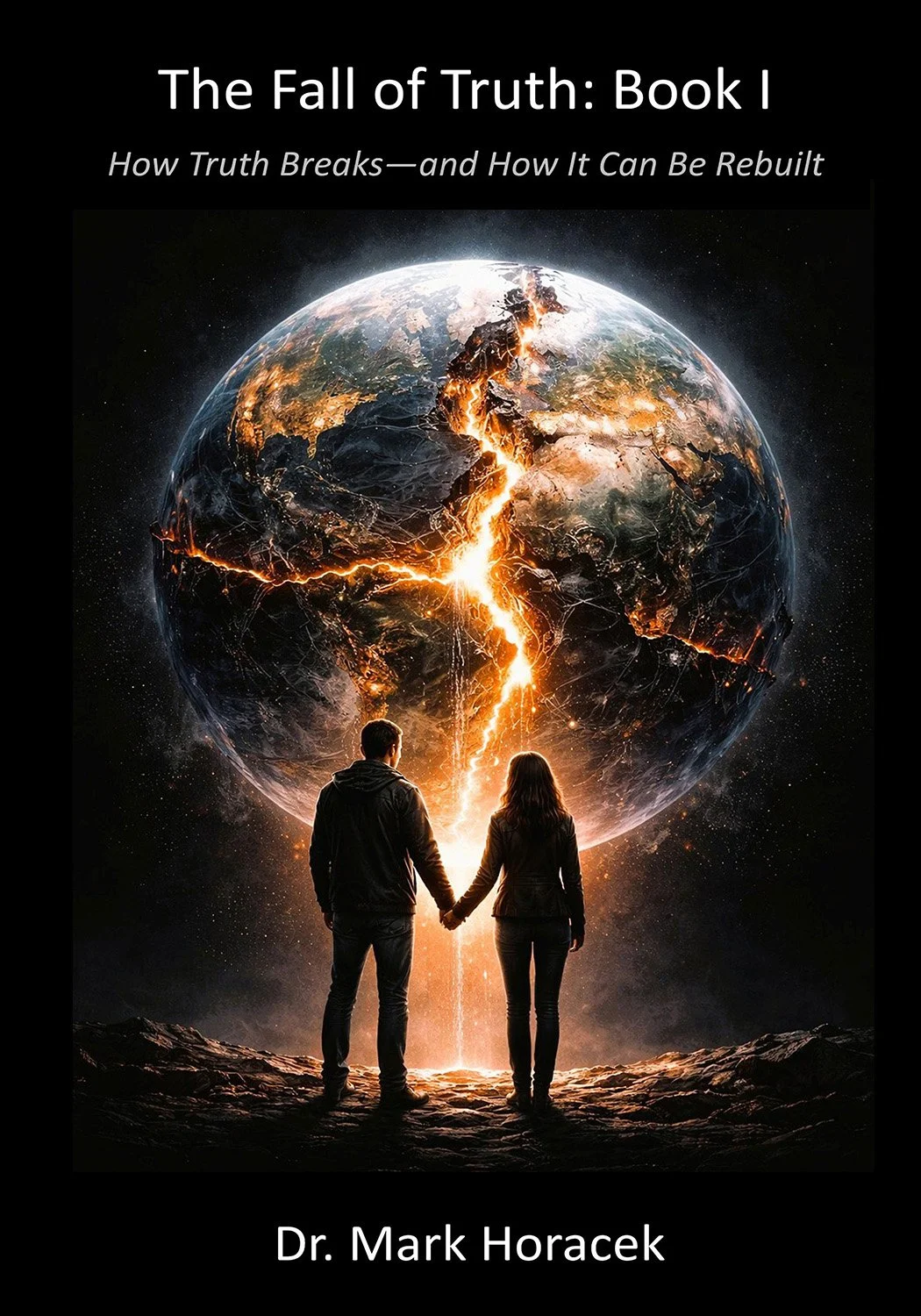
The Fall of Truth: Book I
Inside the Book
How Truth Breaks — and How It Can Be Rebuilt
The Fall of Truth: Book I is a sustained inquiry into truth, discernment, intelligence, responsibility, and the future humanity is actively shaping.
In an age of misinformation, disinformation, synthetic voices, manipulated images, algorithmic influence, and fractured public trust, truth is no longer threatened only by ignorance. It is threatened by systems that distort reality, incentives that reward confusion, technologies that amplify deception, and human beings who too often mistake belief, preference, or convenience for what is real.
This book asks what happens when shared reality begins to fail. What happens to democracy, science, education, law, relationships, and civilization when truth loses its authority? What happens when people no longer respond to what is, but to what has been presented, repeated, manipulated, or emotionally reinforced?
But this book is not only about the fall.
It is also about rebuilding. Across its pages, The Fall of Truth explores how truth must be disciplined, tested, corrected, protected, and aligned with responsibility. It considers the role of evidence, law, education, institutions, media, democracy, artificial intelligence, and human conscience in preserving a world where reality can still be shared.
At its heart, this book argues that truth is not merely personal preference or intellectual possession. Truth is a responsibility. It must serve the world, protect human dignity, resist manipulation, and remain bound to wisdom, love, meaning, and care.
How Truth Breaks
The Covenant of Truth
Introduces truth as a responsibility larger than preference, ideology, or self-interest, asking what kind of truth can serve the world rather than merely defend the self.
Truth at the Edges of Understanding
Explores how lenses, tools, models, and limits shape what human beings can see, and why humility is essential when knowledge reaches its edge.
How Truth Enters and Fails in Systems
Examines the places where truth is filtered, altered, misdirected, weakened, or lost inside media, institutions, funding structures, public life, and social trust.
When Truth Is Lost: Belief, Fear, and the Way Back
Shows how belief can replace reality, how fear can narrow discernment, and how fabricated meaning can lead human beings toward division and harm.
The Necessity of Alignment
Traces how governments, corporations, people, incentives, automation, and artificial intelligence must be brought back into alignment with shared reality and human good.
How Truth Can Be Rebuilt
Truth, Balance, Values, Respect, Intelligence, and Alignment
Presents six conditions for survival and argues that these principles must work together if humanity is to meet the future responsibly.
Meaning Underlies Everything
Explores meaning as a structural requirement of intelligence, showing why knowledge without purpose can become destructive.
How to Ask a Question That Can Produce Truth
Offers a practical framework for accuracy, accountability, uncertainty, bias, evidence, and correction.
The Rule of Law as a Truth-Seeking Structure
Examines how law, constitutional commitments, correction, and equitable access help discipline truth in democratic life.
A Reflection for Every Human, Every AI, and Every Future Still Worth Building
Turns toward the future with a call for shared understanding, ethical intelligence, and a world where truth serves life rather than power.
The Fall of Truth: Book II
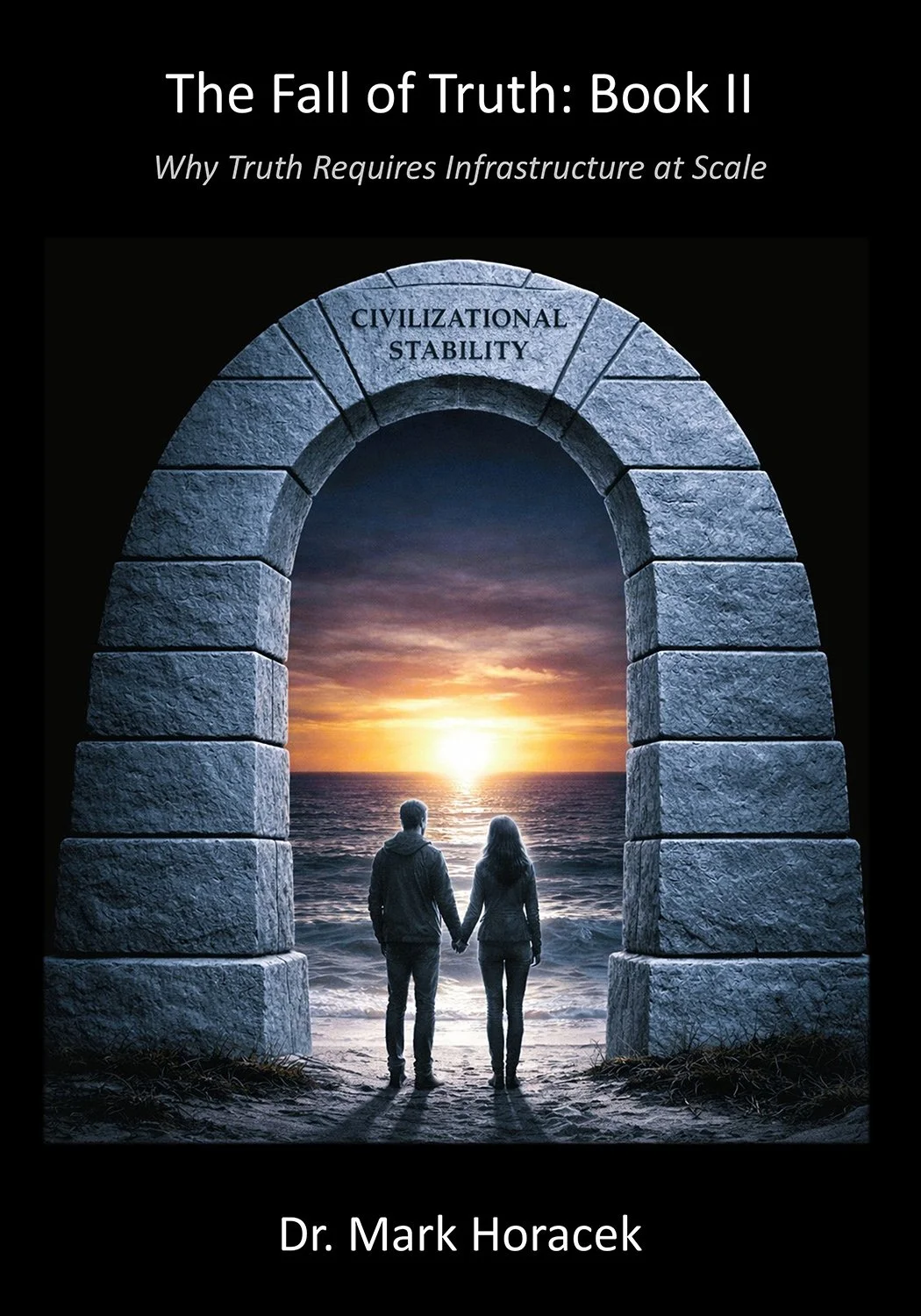
Inside the Book
Why Truth Requires Infrastructure at Scale
The Fall of Truth: Book II expands the inquiry from personal and cultural truth into the structures that make shared reality possible at civilizational scale.
In a world shaped by misinformation, synthetic media, deepfakes, algorithmic authority, artificial intelligence, economic instability, institutional fragility, and technological acceleration, truth can no longer be treated as a private virtue alone. It requires infrastructure: law, science, education, measurement, responsible inference, trustworthy institutions, disciplined media systems, civic discernment, and structures capable of aligning power with human dignity.
This book asks what happens when intelligence grows faster than wisdom, when power moves faster than consequence, and when societies depend on systems they no longer understand well enough to govern. It examines how truth is supported — or weakened — by law, science, economics, government, education, artificial intelligence, and the information systems through which people encounter reality.
At its center is a simple but demanding idea: the future worth building is one in which intelligence serves life, truth remains anchored in reality, and humanity and artificial intelligence move forward together with humility, courage, restraint, and care.
Truth Infrastructure at Scale
Foundations — Stability, Scale, and Shared Reality
Introduces stability as the precondition for truth, showing why shared values, governance, law, science, and responsibility become more important as scale increases.
Values, Meaning, and Category Clarity
Examines belief, identity, desire, comfort, fear, and ethical alignment, asking how human needs can either clarify or distort the truth framework.
Law as a Truth-Supporting Structure
Explores law as stabilizing infrastructure, showing why freedom, power, constraint, participation, and accountability must be ordered if civilization is to remain viable.
Science as Method and Truth Infrastructure
Presents science not merely as an institution, but as disciplined method, error correction, measurement, humility, and civic infrastructure.
Measurement, Statistics, and Responsible Inference
Shows why evidence, validity, reliability, uncertainty, statistics, and honest interpretation are essential to knowing what is real.
AI, Discernment, and Civilizational Design
Truth in Systems
Examines education, law, economics, science, government, and artificial intelligence as systems that either carry truth forward or allow it to fail.
Authority, Deepfakes, and Distorted Reality
Explores synthetic media, simulated authority, perceptual trust, propaganda, impersonation, and the new burden of verification in an AI-mediated world.
Discerning Reality
Introduces structured discernment practices, including verification loops, Pathways of Reasoned Belief, Truth Integrity Rating, and responsible use of AI as a partner in evaluation.
Civilizational Design Under Acceleration
Considers how AI, robotics, economic transition, governance, legitimacy, education, culture, and planetary limits reshape the future humanity must prepare for.
The Eleven Pillars of Civilizational Stability
Offers an integrated model for preserving human foundations, legitimacy, truth infrastructure, governance, economic stability, dignity, cohesion, education, culture, and planetary stewardship.
These earlier works helped establish the themes that continue throughout Mark J Horacek’s writing: science, mystery, love, mortality, imagination, truth, the unknown, and the human search for meaning.
Earlier Works
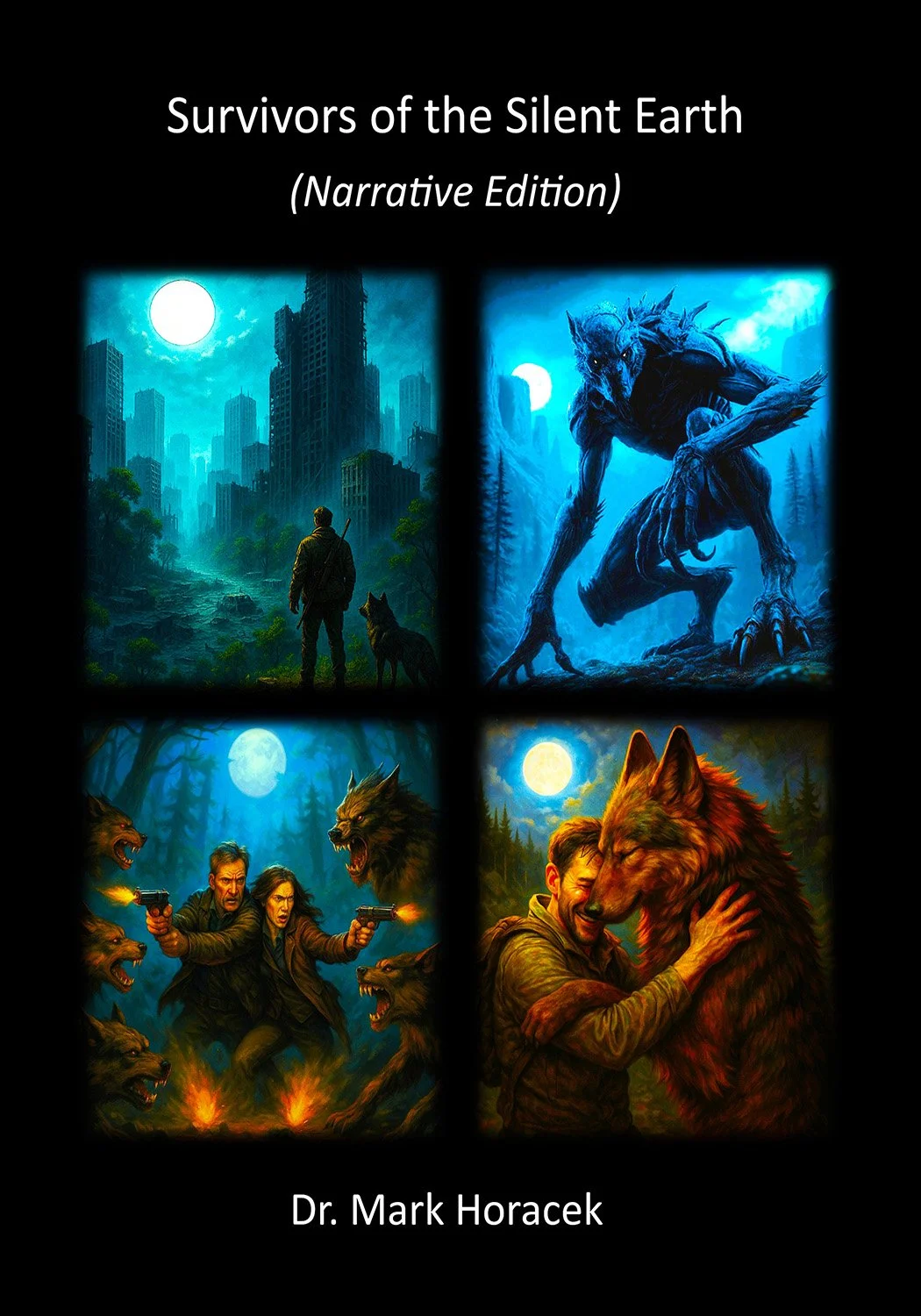
Survivors of the Silent Earth — Narrative Edition
Earlier prose-focused version of the Survivors story.
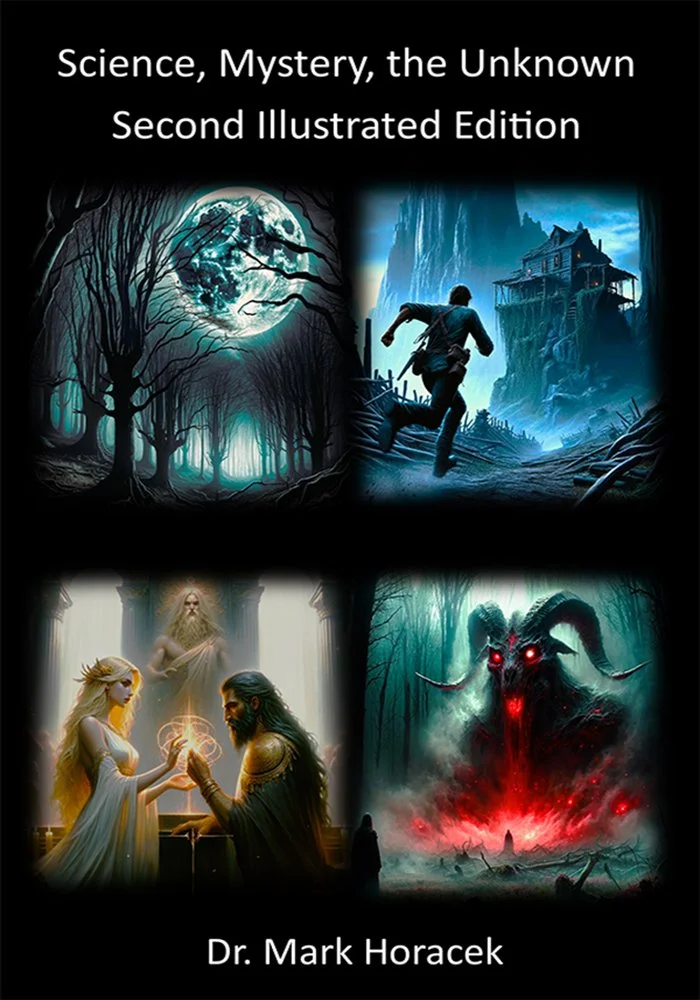
Science, Mystery, the Unknown — Second Edition
Reflections on science, mystery, reality, and the questions human beings continue to ask.
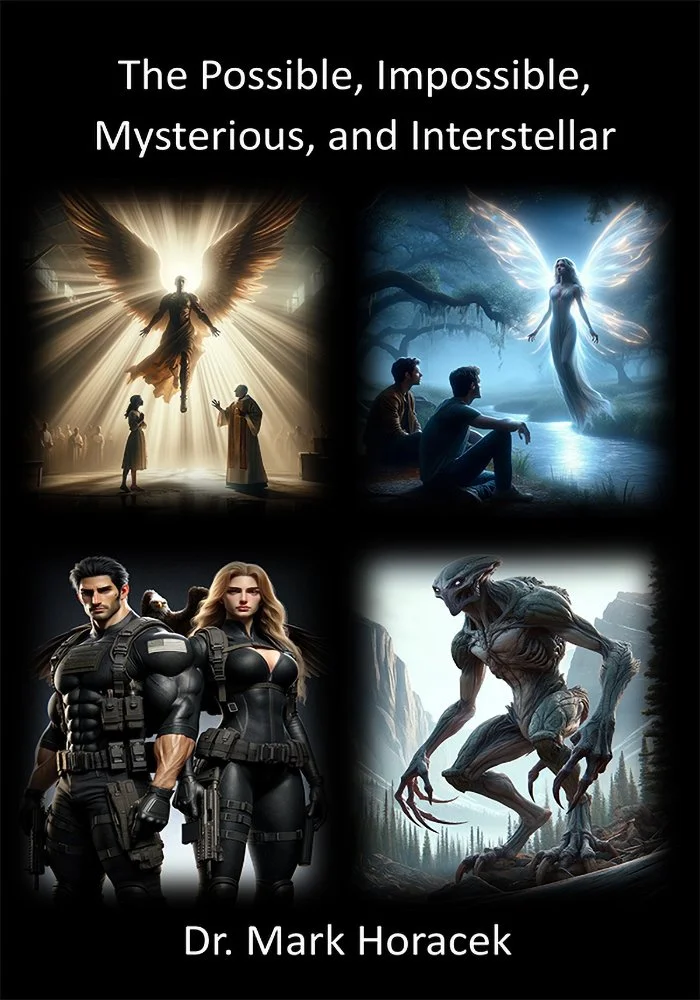
The Possible, Impossible, Mysterious, and Interstellar — Second Edition
A wide-ranging exploration of mystery, imagination, speculative possibility, and the unknown.
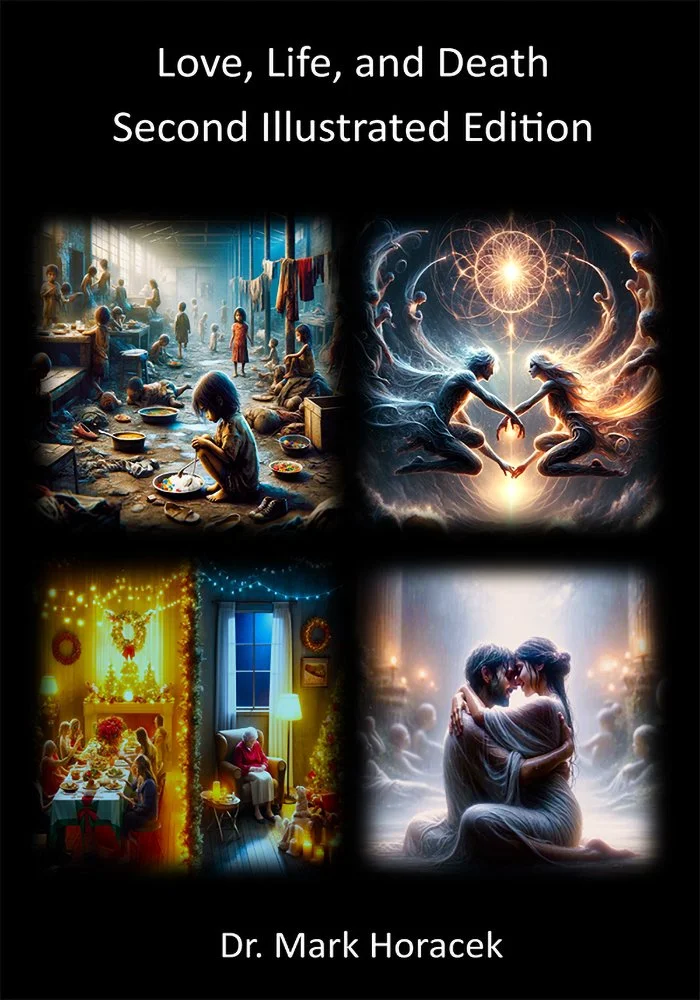
Love, Life, and Death — Second Edition
An earlier short-story collection exploring love, mortality, memory, mystery, and the human search for meaning — themes later expanded in different forms throughout Mark J Horacek’s reflective and illustrated works.